I used to think sage green backsplash kitchen was about buying the right things, then I spent a weekend rearranging what I already owned and the room finally clicked. This roundup leans on that lesson, practical moves over purchases, with a few honest notes on what didn’t work for me.
1. Soft Glow Sage Refresh
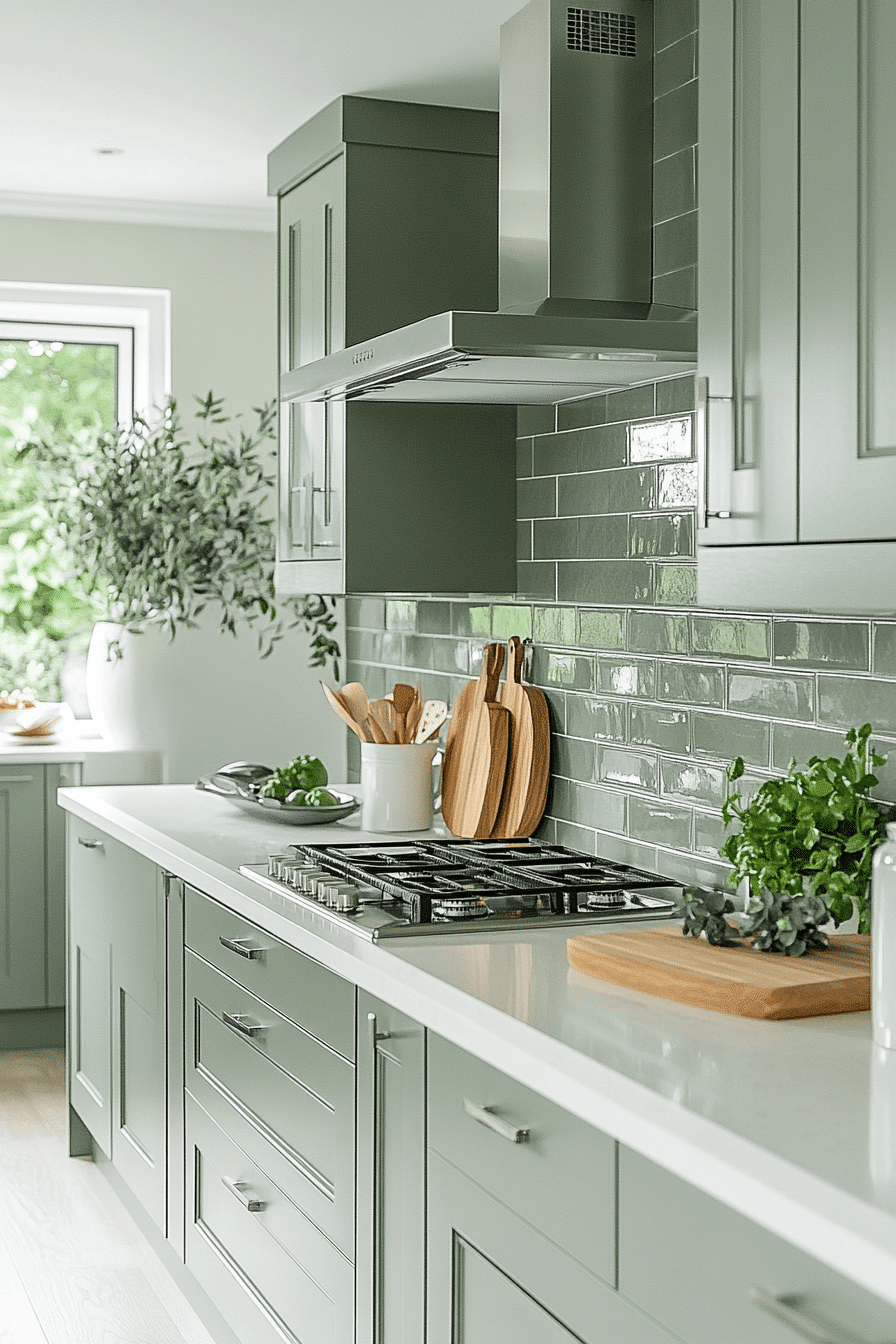
A gentle sage tone can make a backsplash feel fresh without stealing all the attention. A sage green backsplash kitchen looks especially beautiful when soft green tile is paired with white cabinetry and pale counters that allow the color to breathe. The shade adds personality while still feeling calm and refined. A lightly reflective finish helps bounce brightness through the room and keeps everything feeling open. The overall effect is modern, polished, and easy to live with.
2. Minimal Lines Quiet Color
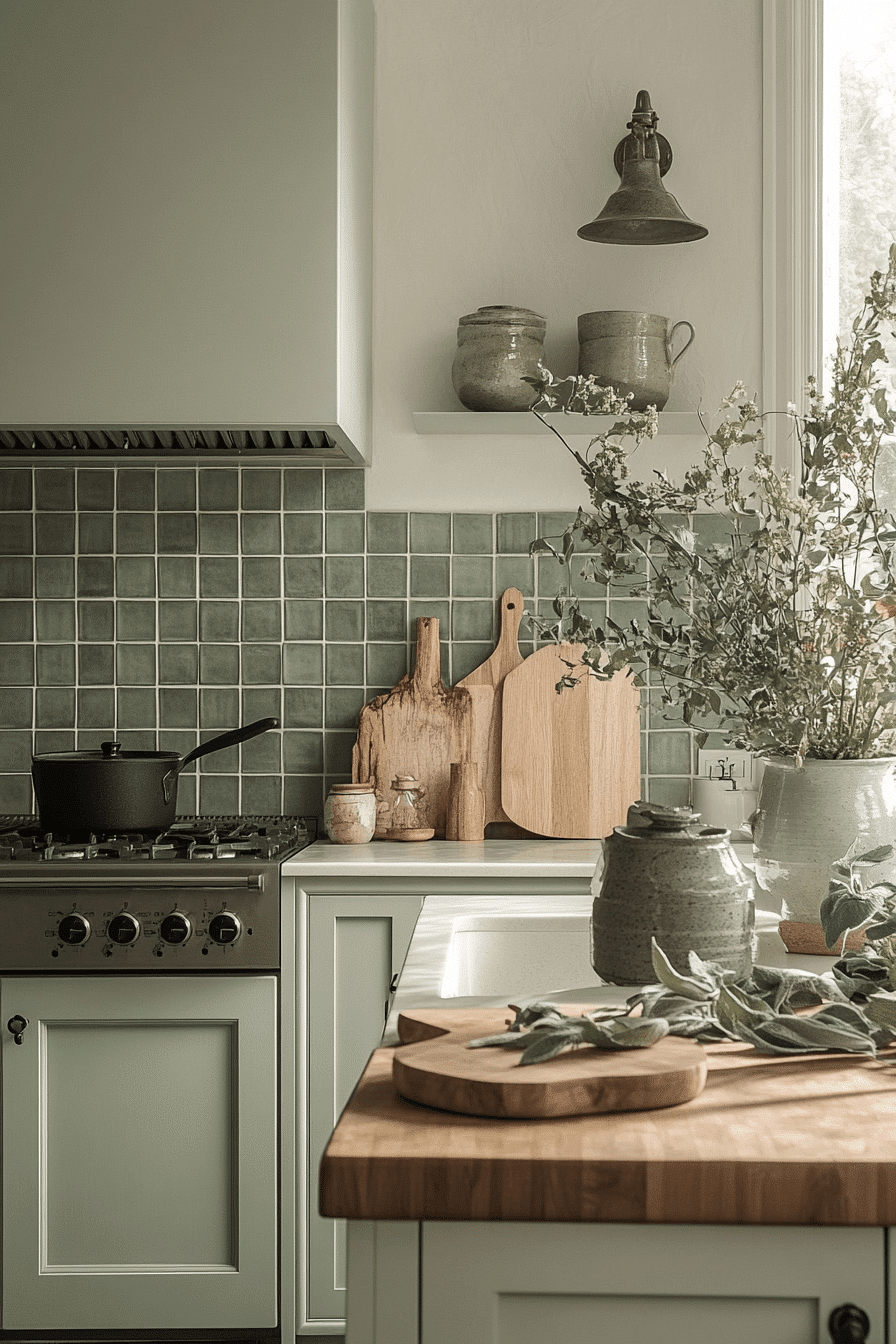
Minimal design often works best when one detail is allowed to quietly shine. A sage green backsplash kitchen benefits from simple tilework and clean lines because the soft green becomes the focal point without visual clutter. Neutral cabinetry and restrained styling let the backsplash feel intentional rather than decorative. The room stays airy, modern, and relaxed from every angle. It is a beautiful way to introduce color without overwhelming the design.
3. Fresh Subway Tile Revival
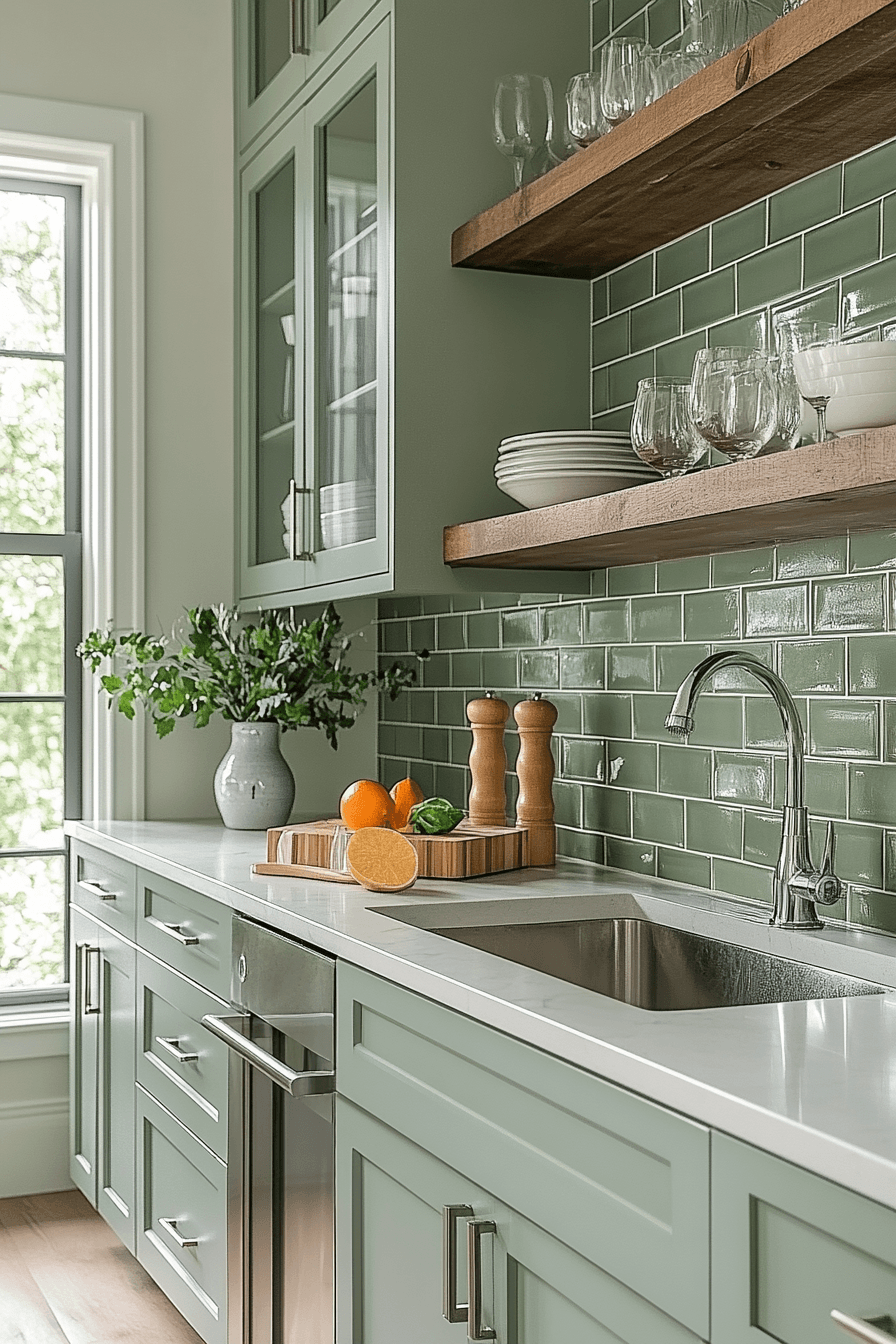
Subway tile feels completely renewed when softened with a muted green finish. A sage green backsplash kitchen gains an updated charm when this classic shape is paired with a color that feels current and calming. The familiar layout keeps the room grounded, while the sage adds a fresh twist that works beautifully with marble, brushed metal, or matte details. The palette stays easy on the eyes and wonderfully inviting. The result feels timeless, bright, and polished.
4. Feature Wall Kitchen Focus
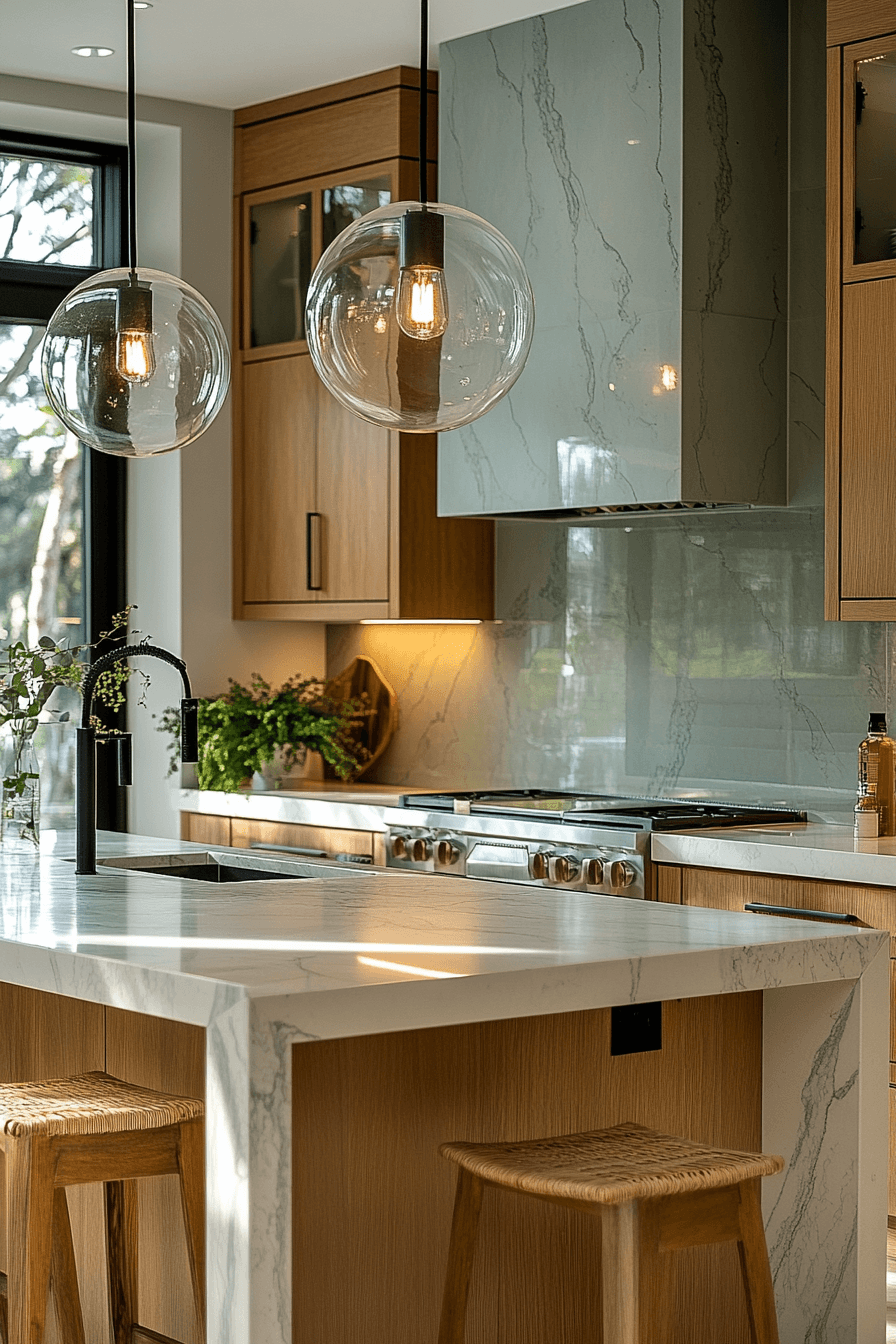
A full sage focal area can instantly give the kitchen more presence and cohesion. A sage green backsplash kitchen becomes especially eye-catching when the backsplash is treated as a strong visual feature that ties the room together. The color brings depth while still staying approachable and soft. In open spaces, this kind of coverage can help the whole layout feel more unified. The final mood is confident, calm, and beautifully styled.
5. Seamless Slab Sage Calm
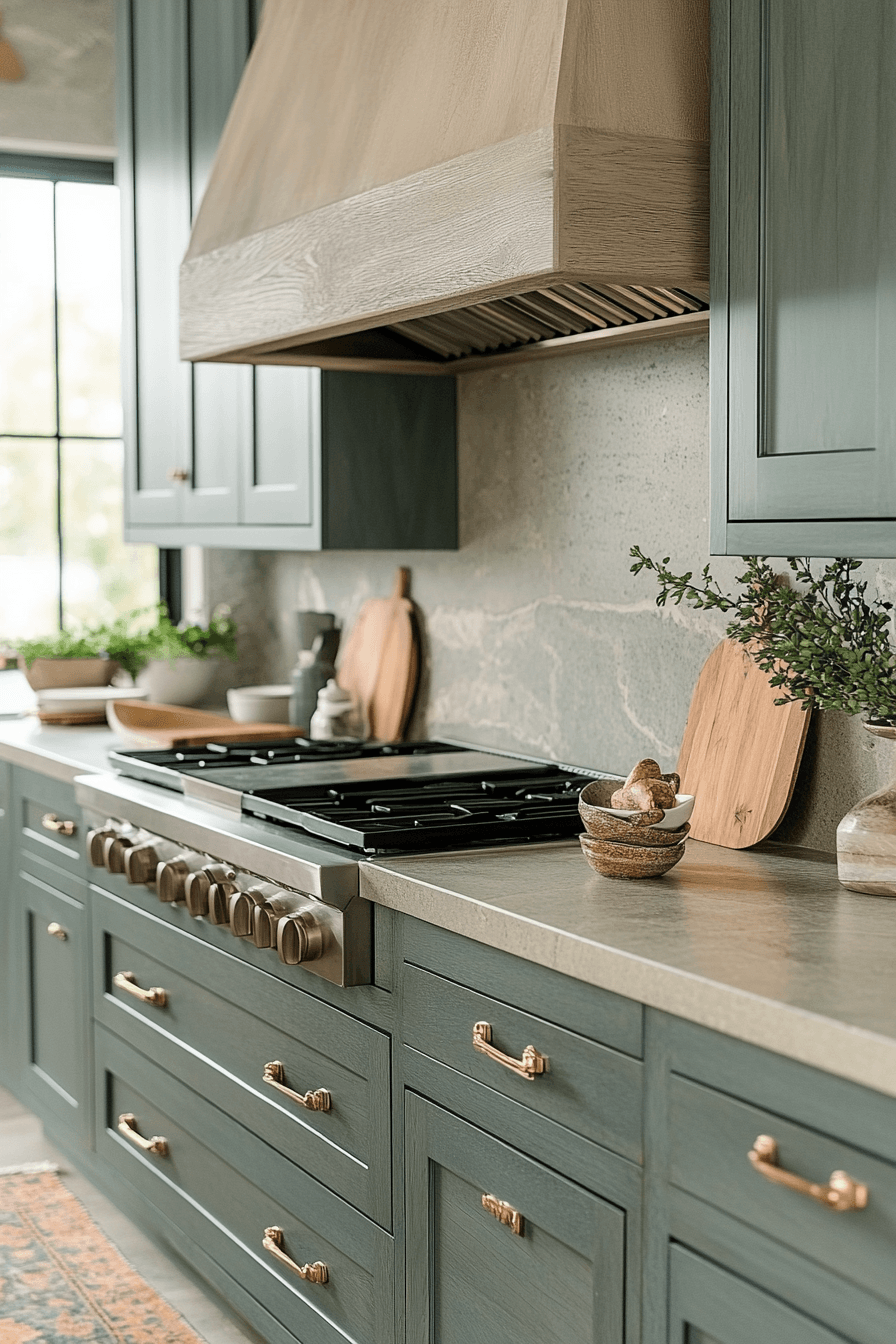
Large uninterrupted surfaces can make a backsplash feel cleaner and more architectural. A sage green backsplash kitchen looks especially elevated when slab-style material creates a sleek wall with very little visual interruption. The lack of grout keeps the focus on the color and gives the room a more seamless finish. Paired with simple cabinetry, the effect feels luxurious without trying too hard. Everything reads as modern, calm, and intentional.
6. Linear Pattern Polished Flow
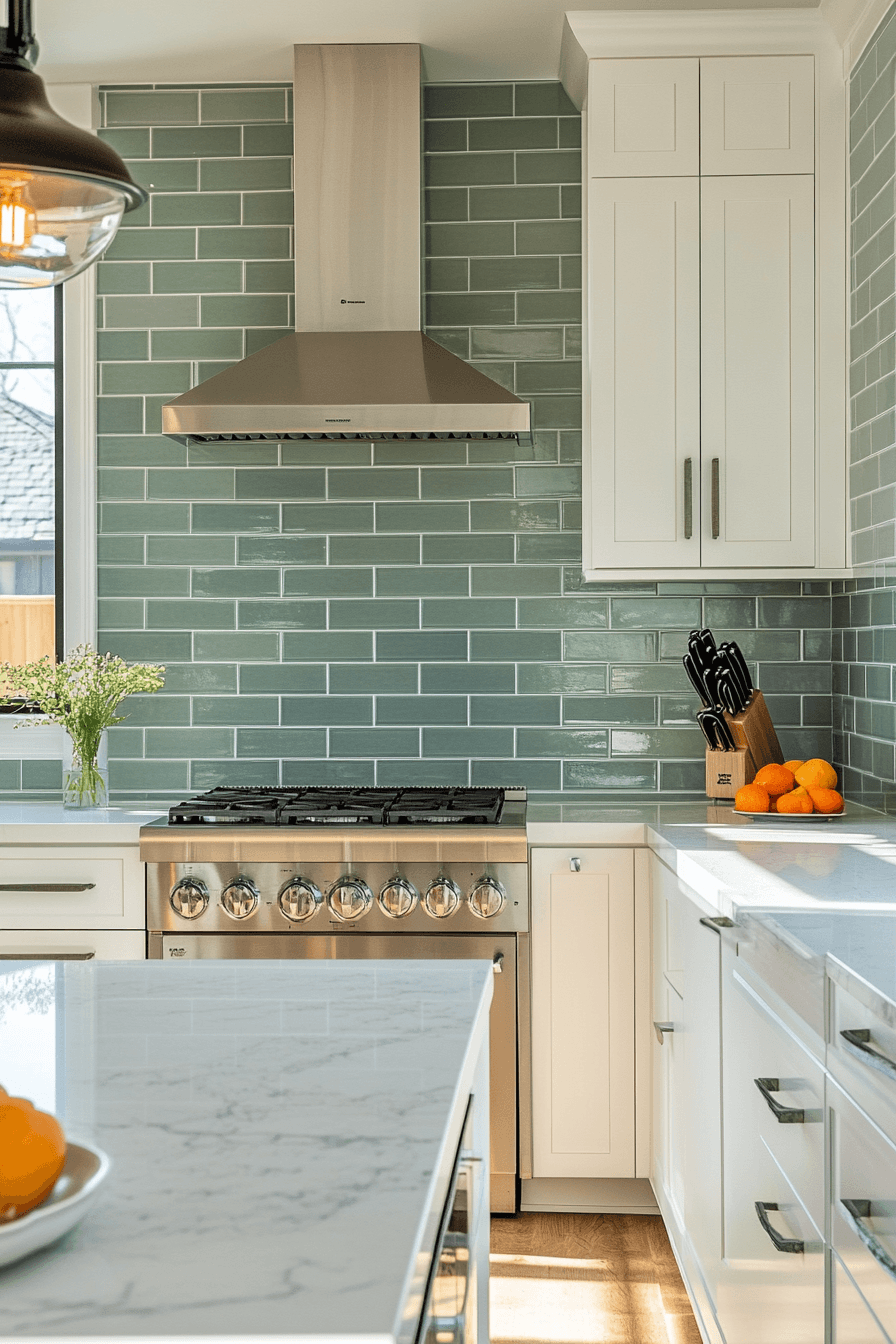
Structured lines can bring energy into the room while keeping the palette composed. A sage green backsplash kitchen feels especially fresh when sage and white are arranged in a clean linear pattern that adds movement without creating visual noise. The geometry keeps the look sharp, while the muted tone prevents it from feeling too bold. This is an easy way to add interest while preserving simplicity. The room feels bright, organized, and modern.
7. Gloss Grid Bright Lift
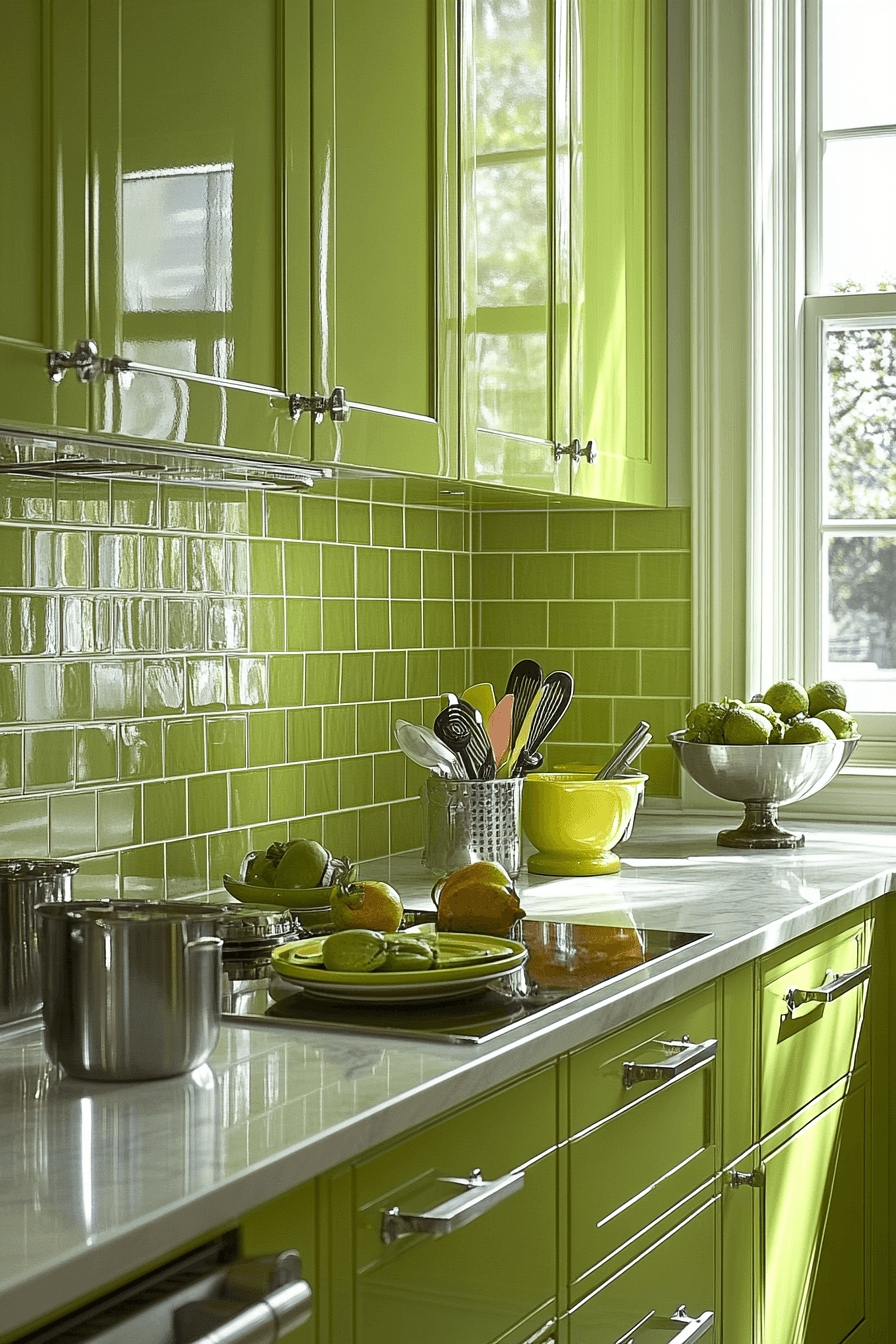
Glossy square tile can make the room feel brighter with very little effort. A sage green backsplash kitchen benefits from a grid pattern because the shine catches the light and helps the soft green appear more luminous. The square layout adds order, while the color keeps everything from feeling rigid. This works especially well in kitchens that need a little more openness and freshness. The final effect feels clean, photogenic, and wonderfully current.
8. Chevron Movement Modern Charm
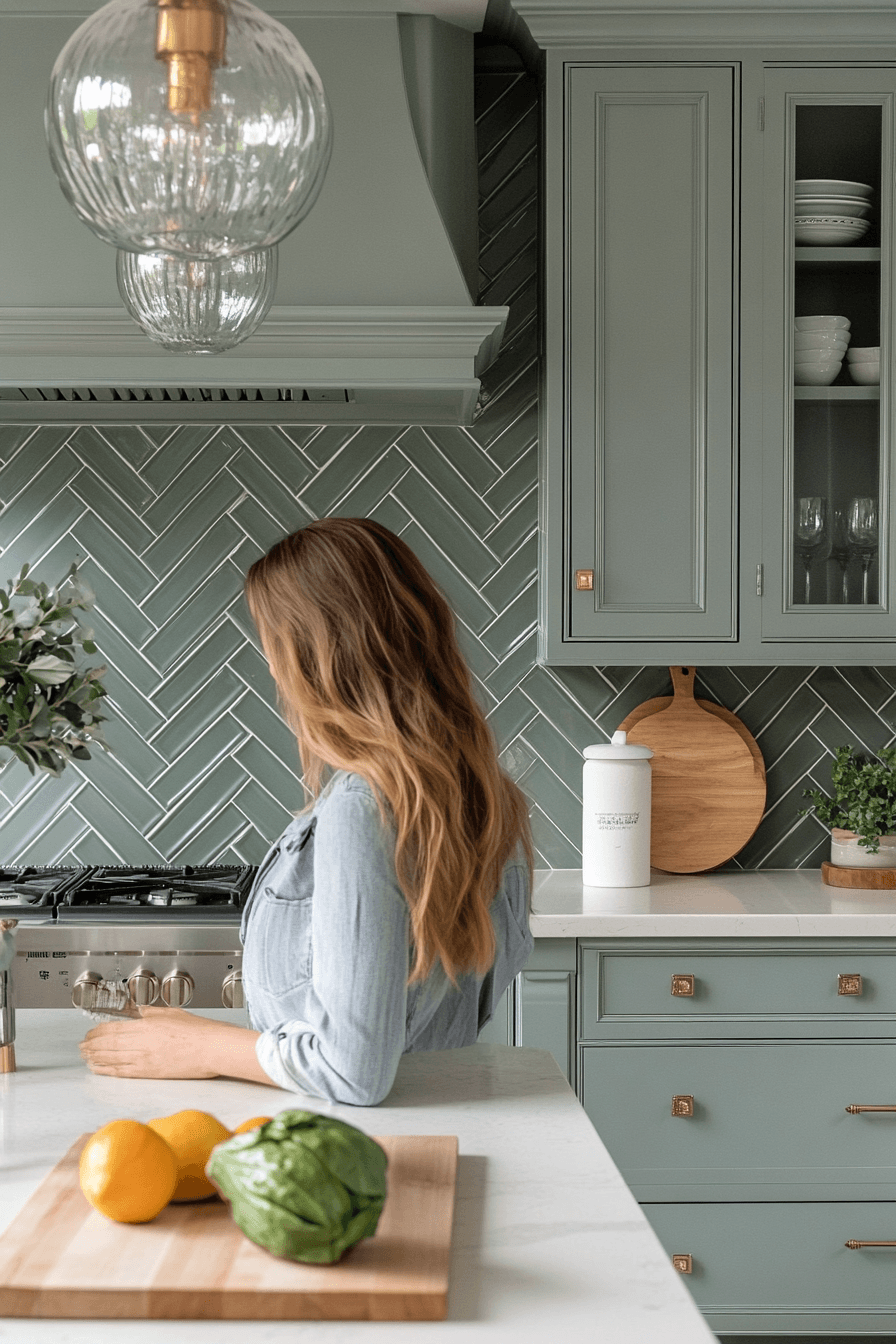
Chevron layouts can introduce movement while still feeling controlled and stylish. A sage green backsplash kitchen takes on extra personality when angled sage tiles create a lively rhythm across the wall. The soft green keeps the pattern grounded, so the design never feels too busy or sharp. This look works beautifully with warm wood, cool stone, and simple metal finishes. The room feels modern, playful, and easy to personalize.
9. Herringbone Grace In Sage
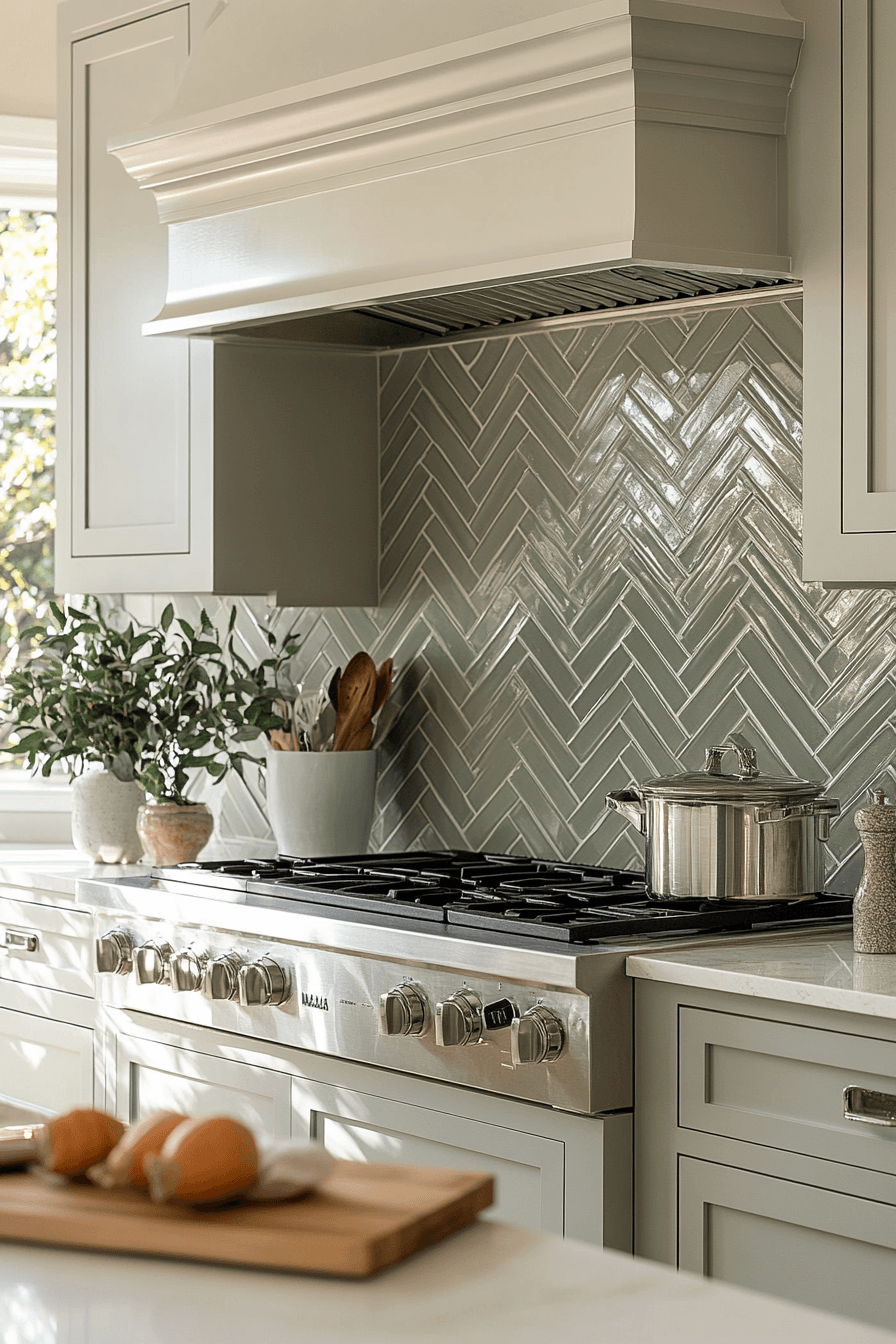
Herringbone brings a familiar elegance that feels especially lovely in muted color. A sage green backsplash kitchen becomes more layered when this classic pattern is rendered in a gentle green that stays soft and polished. The layout adds texture and movement, while the color keeps the room calm. It is a refined choice for anyone who wants detail without excess. The final effect feels timeless, welcoming, and beautifully composed.
10. Matte Finish Quiet Luxe
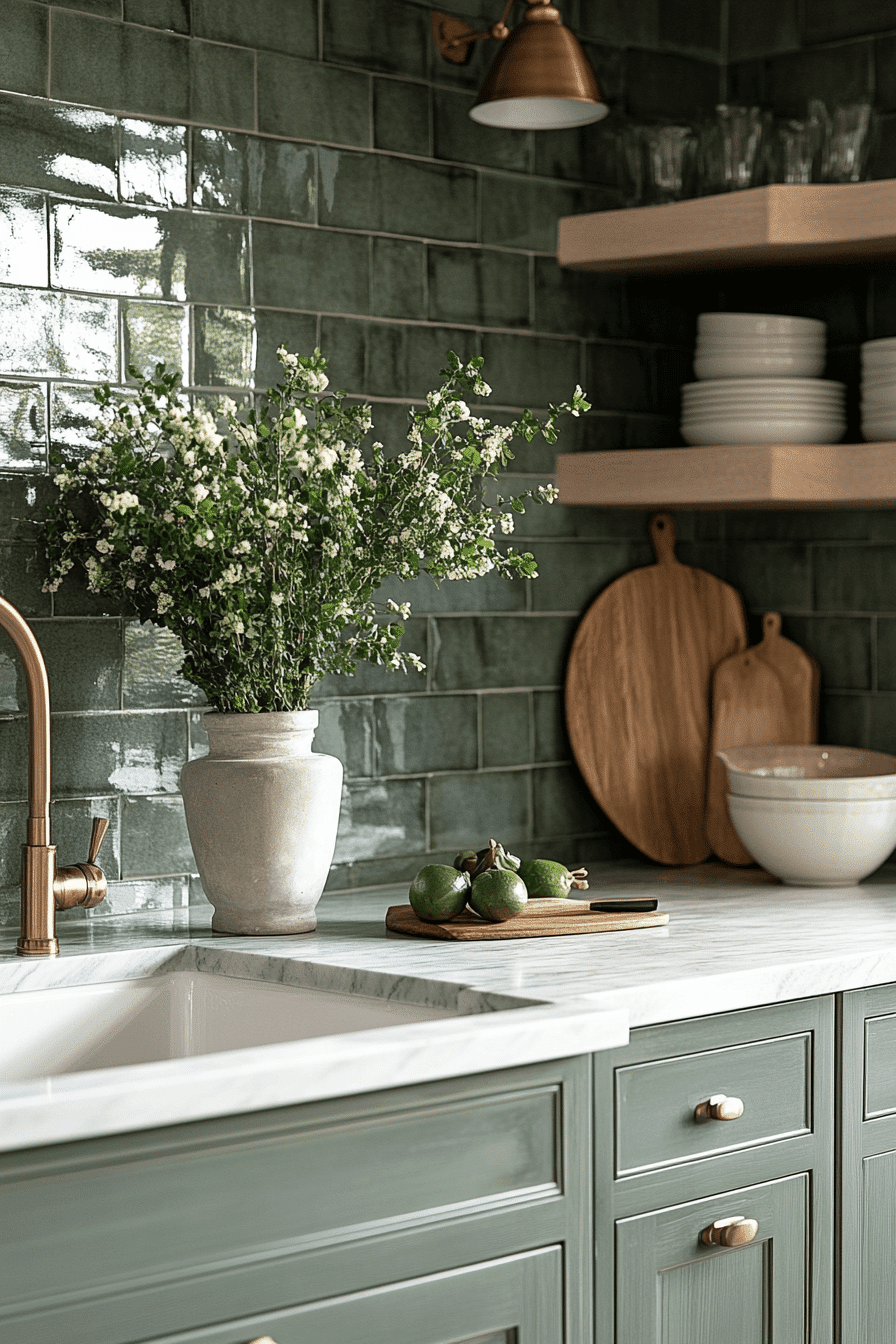
A matte finish can make sage feel especially modern and quietly luxurious. A sage green backsplash kitchen looks beautifully composed when the tile has a velvety surface that deepens the color without adding shine. The muted texture helps the room feel calmer and more grounded. Minimal cabinetry and streamlined counters pair especially well with this look. The result is understated, elegant, and highly livable.
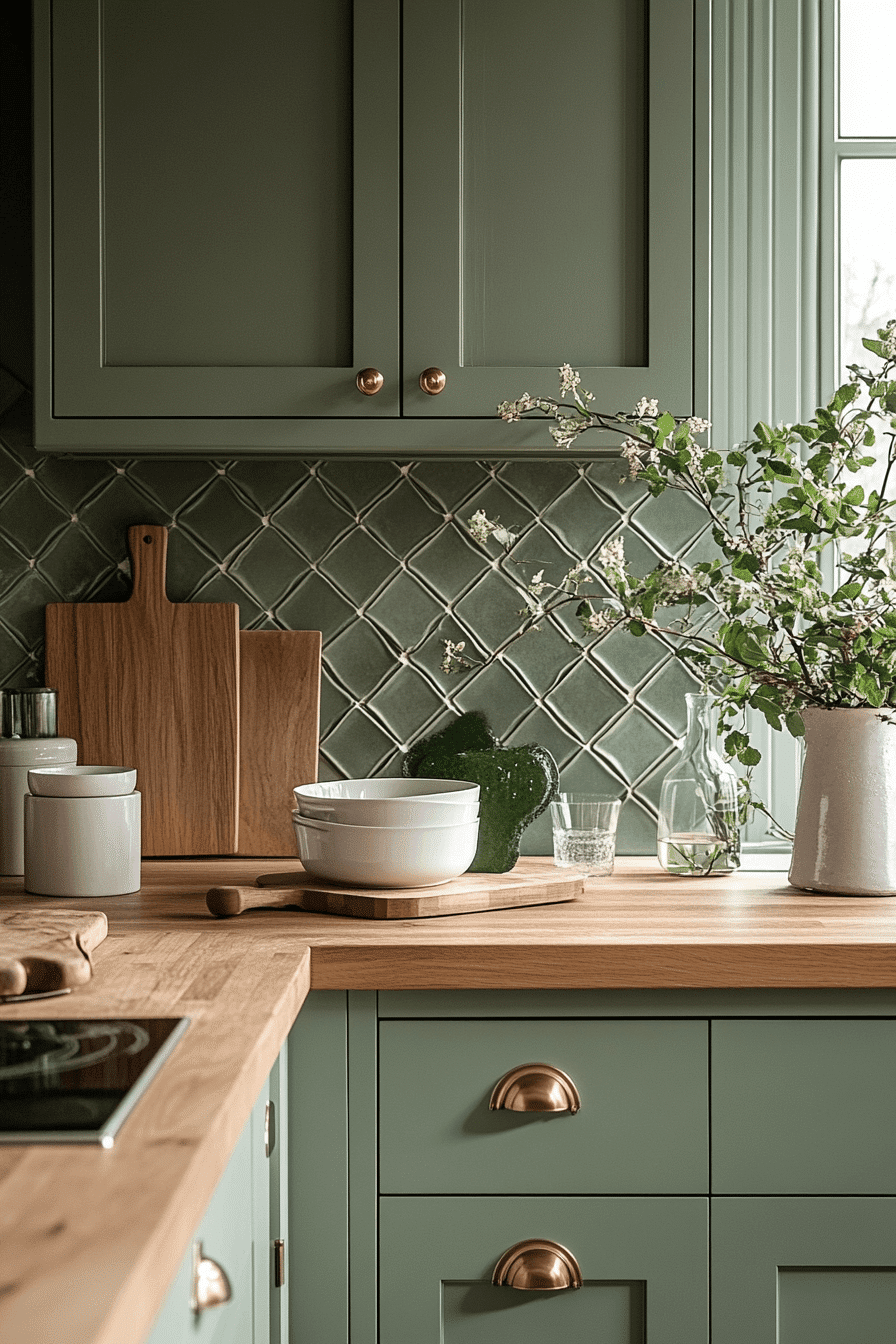
11. Geometric Kitchen Artistry
You’ll find the same thinking applied in our handleless cabinets, antique white kitchen cabinets, and off white kitchen cabinets, which cover a few adjacent ideas worth a look.
Bold shapes can make a soft color story feel much more distinctive. A sage green backsplash kitchen stands out when geometric tile adds pattern and structure while the muted green keeps everything balanced. The shapes bring energy, but the palette stays soothing and refined. This is a beautiful way to create a kitchen that feels artistic without becoming loud. The room ends up feeling fresh, modern, and full of thoughtful detail.
12. Glass Glow Soft Brightness
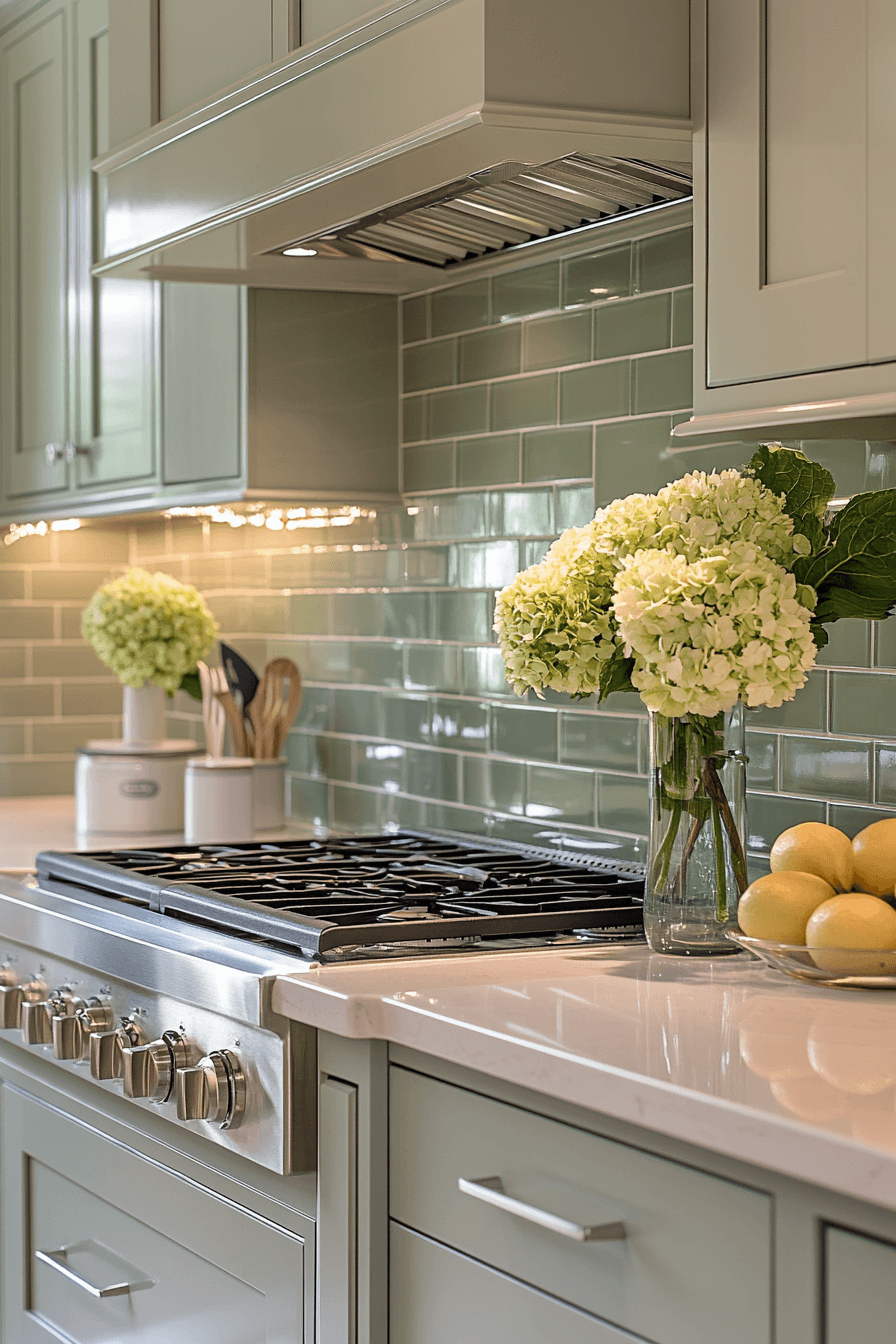
Reflective tile can brighten the kitchen while keeping the overall mood gentle. A sage green backsplash kitchen feels more luminous when glossy glass pieces catch and scatter light across the wall. The sage tone stays soft, but the shine helps the room feel more open and elevated. This is especially useful in darker kitchens or compact layouts that need extra brightness. The final look is sleek, clean, and beautifully polished.
13. Color Field Kitchen Impact
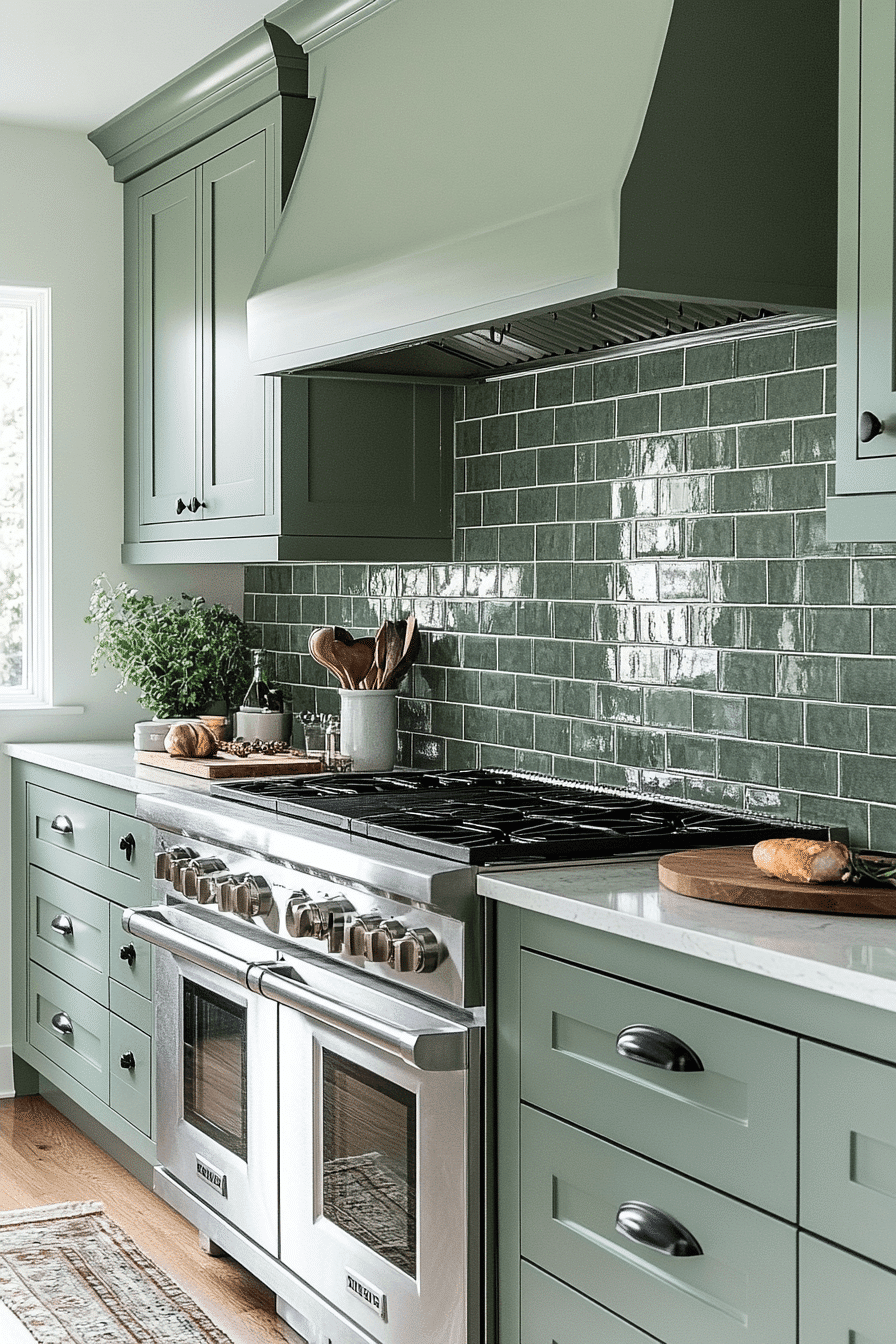
A strong field of color can sometimes feel more modern than a busy pattern ever could. A sage green backsplash kitchen looks especially intentional when broad areas of green are used without much interruption, allowing the shade itself to become the design feature. This simple approach feels bold but never overwhelming because the tone stays muted and calm. It is ideal for minimalist kitchens that still want personality. The room feels current, clean, and highly edited.
14. Vertical Lines Height Boost
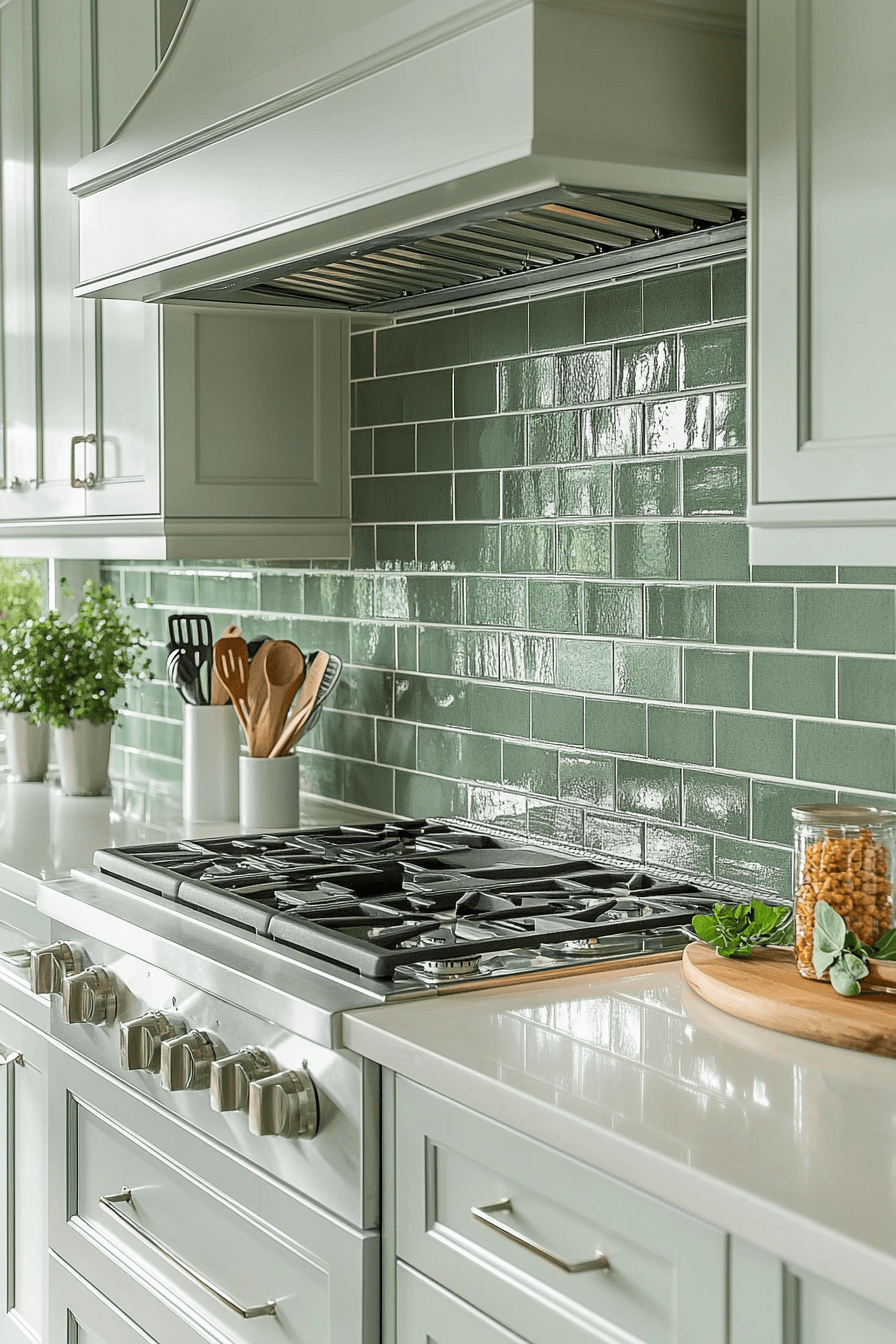
Vertical tile placement can subtly shift the proportions of the whole room. A sage green backsplash kitchen feels taller and more design-forward when tiles are installed upright instead of in a traditional horizontal pattern. The vertical direction adds a sleek architectural note, while the sage tone keeps the effect approachable. This small change creates a big visual payoff without increasing clutter. The final space feels polished, modern, and a little more dramatic.
15. Textured Tile Gentle Depth
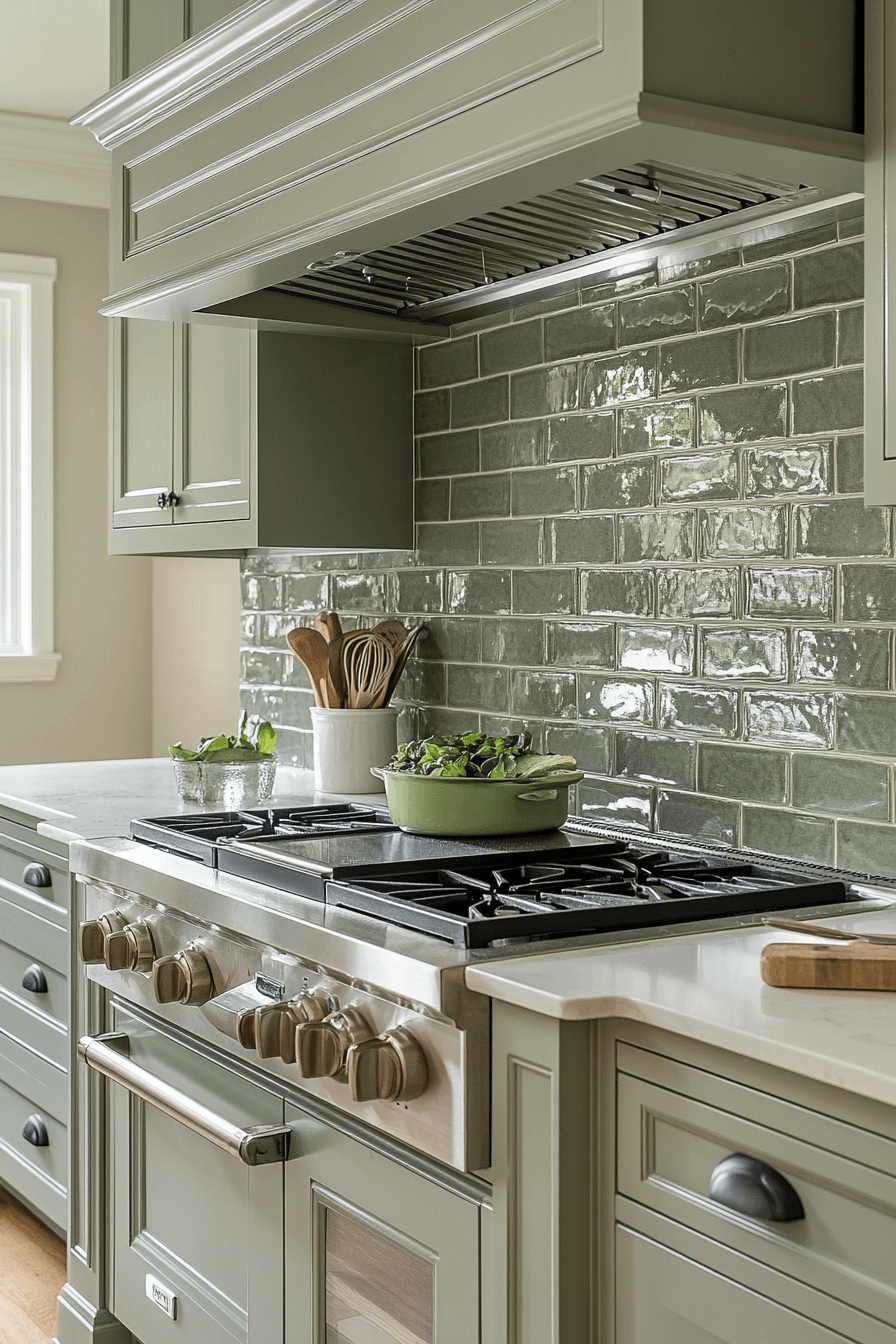
Raised textures can turn a quiet color into something much more dimensional. A sage green backsplash kitchen becomes more dynamic when sculpted or tactile tiles catch light and shadow throughout the day. The green remains soft, which helps the texture feel refined instead of overwhelming. Paired with smoother counters and cabinetry, the contrast becomes even more effective. The room feels layered, current, and beautifully detailed.
16. Porcelain Panel Open Calm
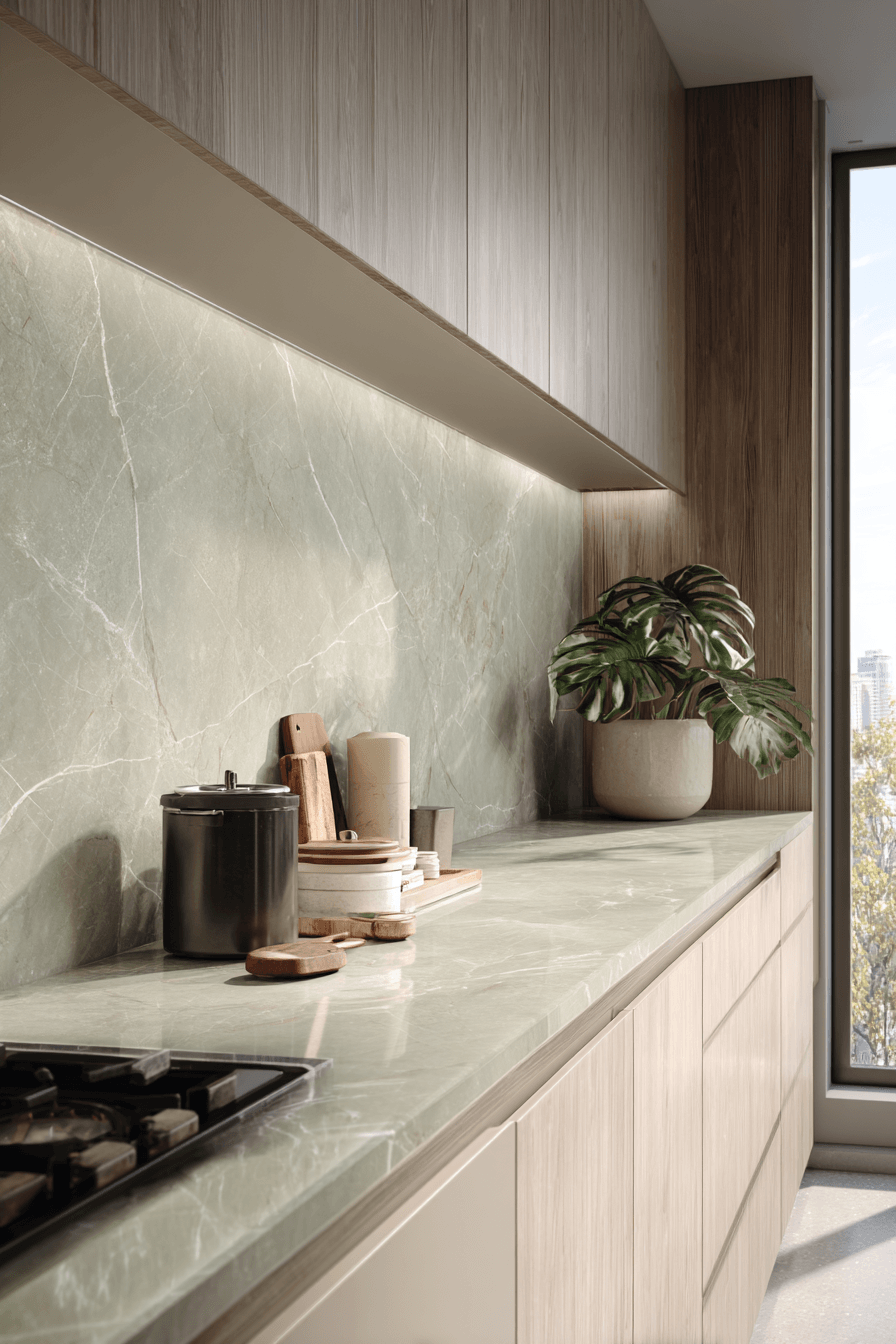
Oversized porcelain creates a clean, expansive look that feels effortlessly modern. A sage green backsplash kitchen benefits from large-format panels because the minimal grout lines keep the wall feeling smooth and uninterrupted. The soft green adds warmth so the kitchen never feels too stark or industrial. This approach is practical as well as elegant, which makes it especially appealing for everyday use. The final mood is sleek, open, and highly refined.
17. Stone Blended Sage Style
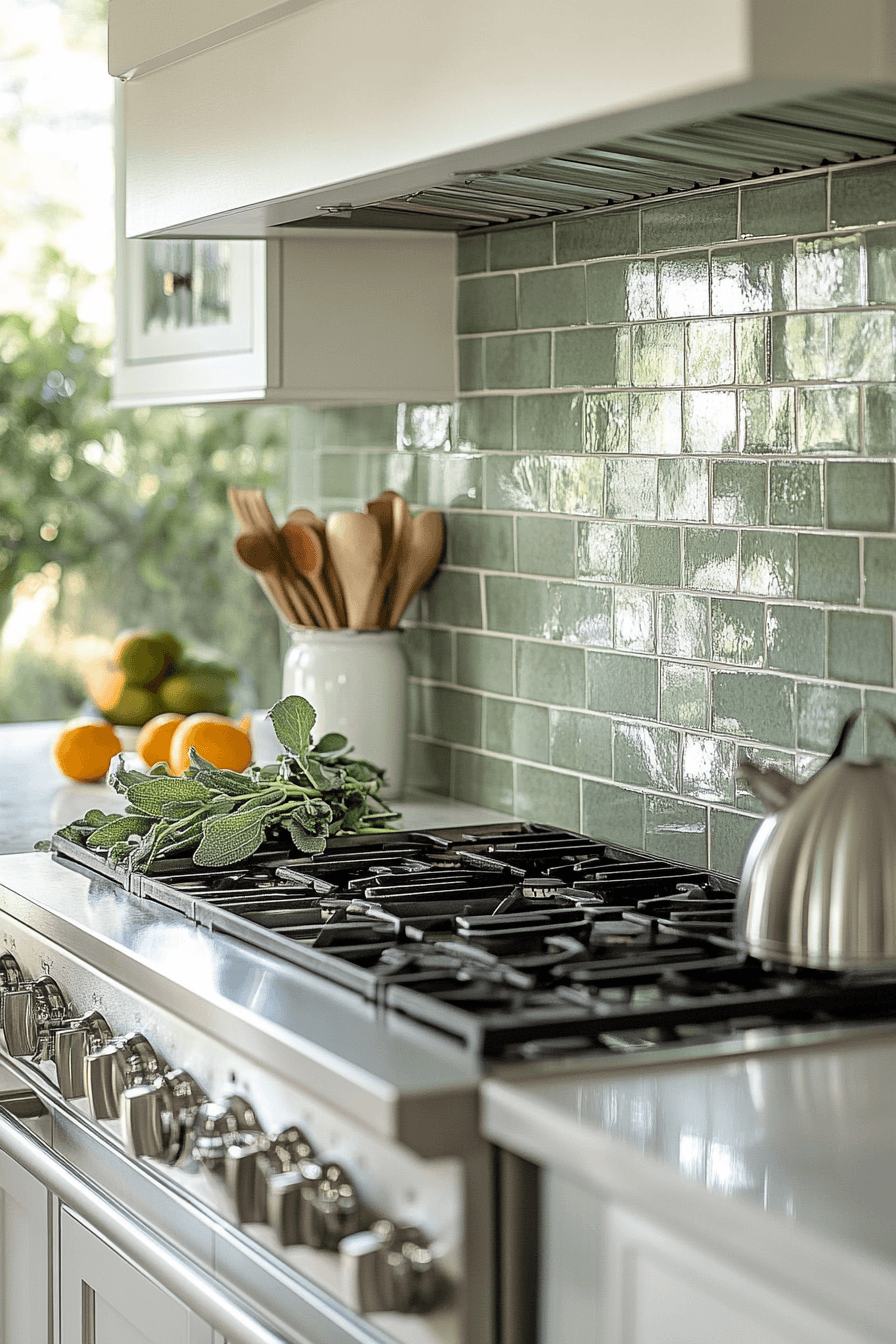
Combining sage with natural stone can make the backsplash feel more organic and custom. A sage green backsplash kitchen gains depth when the green tile is layered beside stone or stone-look surfaces that add natural variation. The materials complement one another without making the room feel overdesigned because the palette remains restrained. This look feels relaxed, tactile, and highly stylish. The kitchen ends up grounded and unique.
18. Strip Tile Sleek Stretch
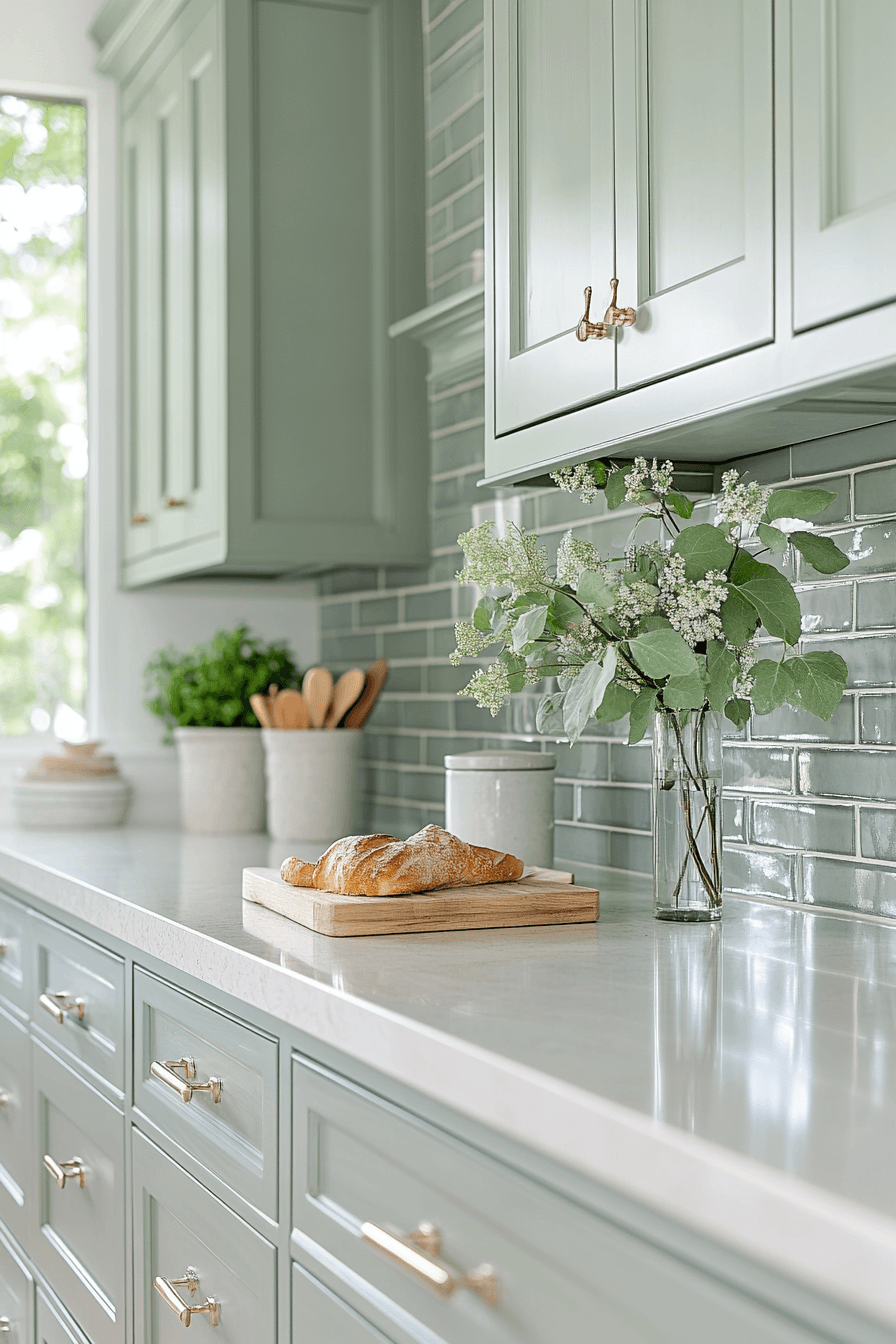
Long narrow tiles can stretch the room visually in a very elegant way. A sage green backsplash kitchen feels wider and more streamlined when strip tiles carry the eye across the wall in a clean, consistent direction. The shape feels modern, and the soft green prevents it from feeling too sharp. It is a strong design move that still remains warm and welcoming. The final effect is sleek, airy, and very polished.
19. Mini Tile Modern Charm
If the look works for you here, our dark oak kitchen cabinets, shaker style cabinets, and sage green kitchen cabinets walk through related moves for nearby rooms.
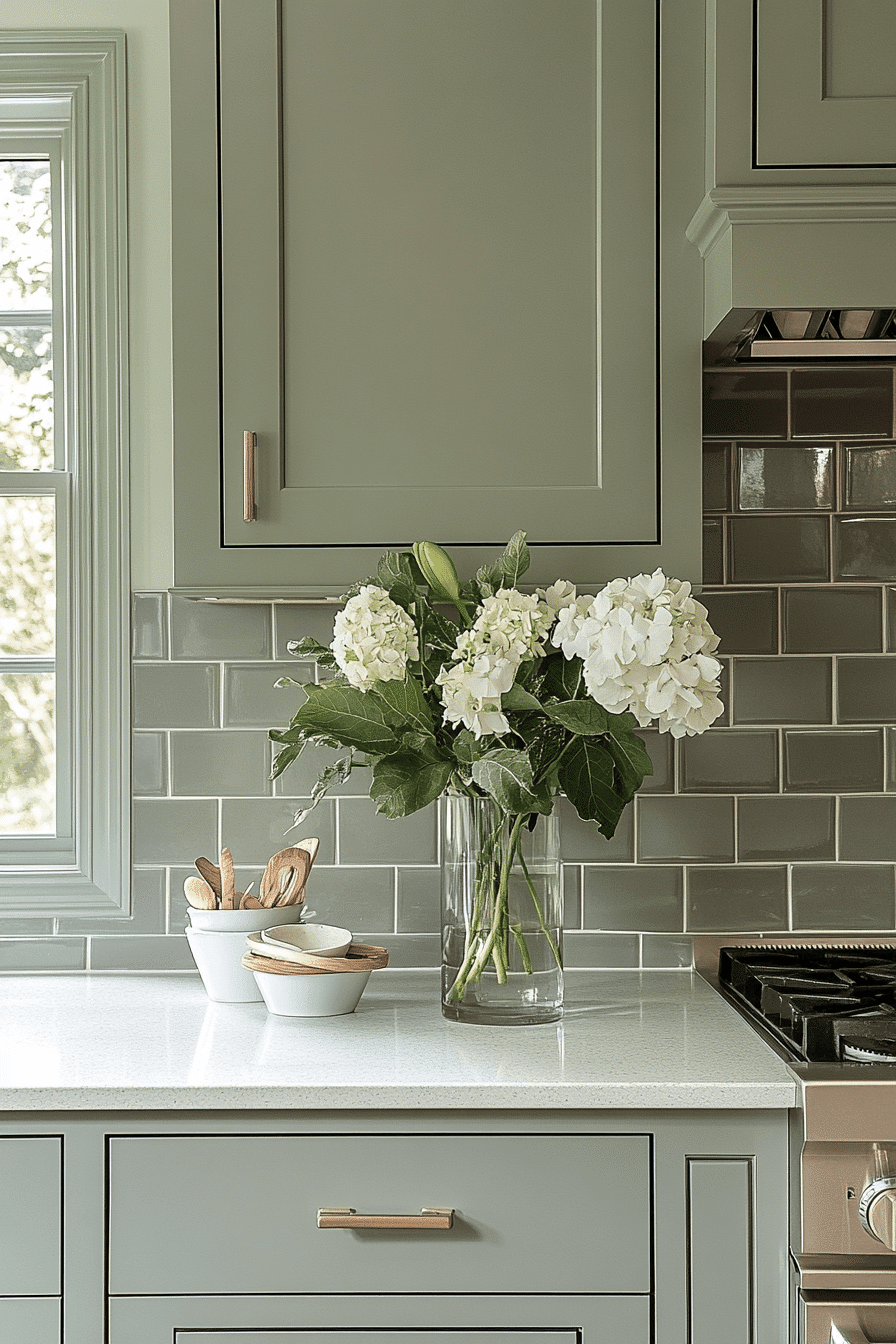
Smaller-format tile can add charm without making the backsplash feel too busy. A sage green backsplash kitchen looks especially sweet and current when mini subway tiles introduce delicate texture and scale. This works especially well in compact areas or kitchens that want detail without heaviness. The sage tone keeps everything feeling soft and cohesive. The finished room feels playful, polished, and thoughtfully styled.
20. Stacked Rows Clean Order
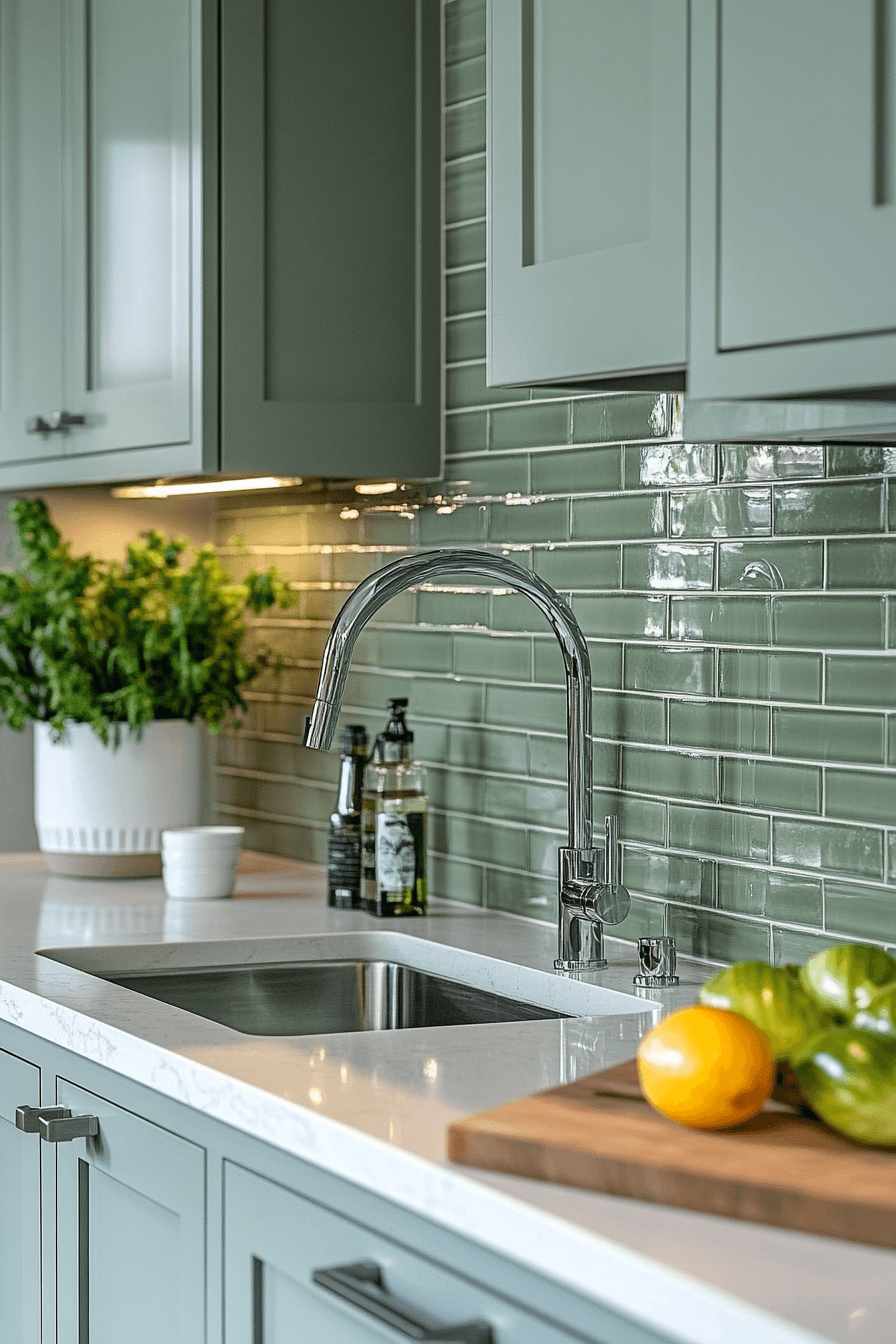
Stacked horizontal tile can make the backsplash feel more orderly and contemporary. A sage green backsplash kitchen becomes especially architectural when long tiles are aligned in clean rows that emphasize width and rhythm. The green softens the structure, so the room never feels too rigid. This look pairs beautifully with many countertop styles and keeps the overall design understated. The final result feels elegant, neat, and highly versatile.
21. Monochrome Sage Serenity
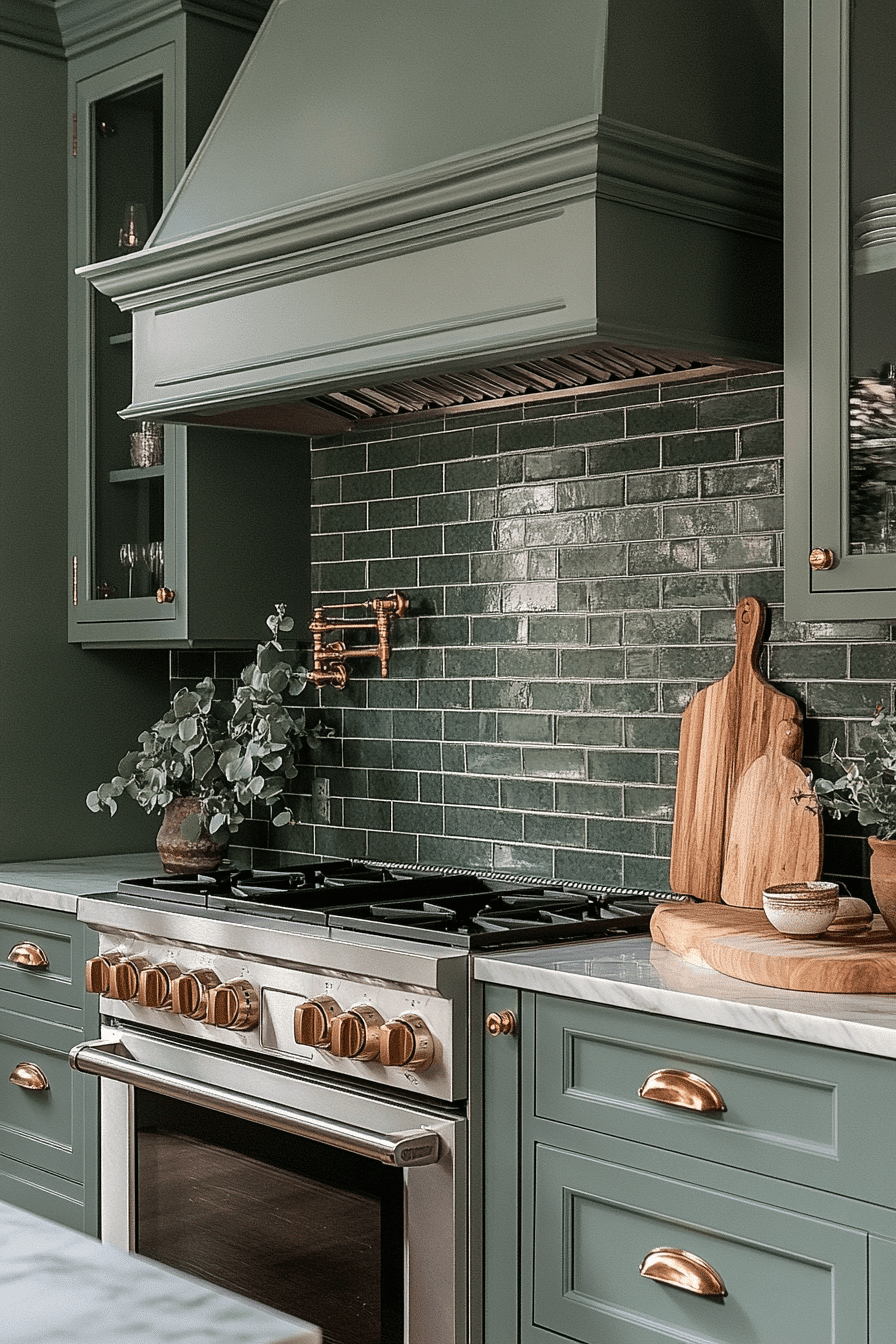
Monochrome treatment can make sage feel even calmer and more immersive. A sage green backsplash kitchen feels especially soothing when the tile and grout are kept in the same soft green tone. This creates a seamless surface that highlights the beauty of the shade rather than the pattern. The approach feels modern, quiet, and very intentional. It is a simple choice that makes a surprisingly strong impact.
22. Marble Accent Subtle Elegance
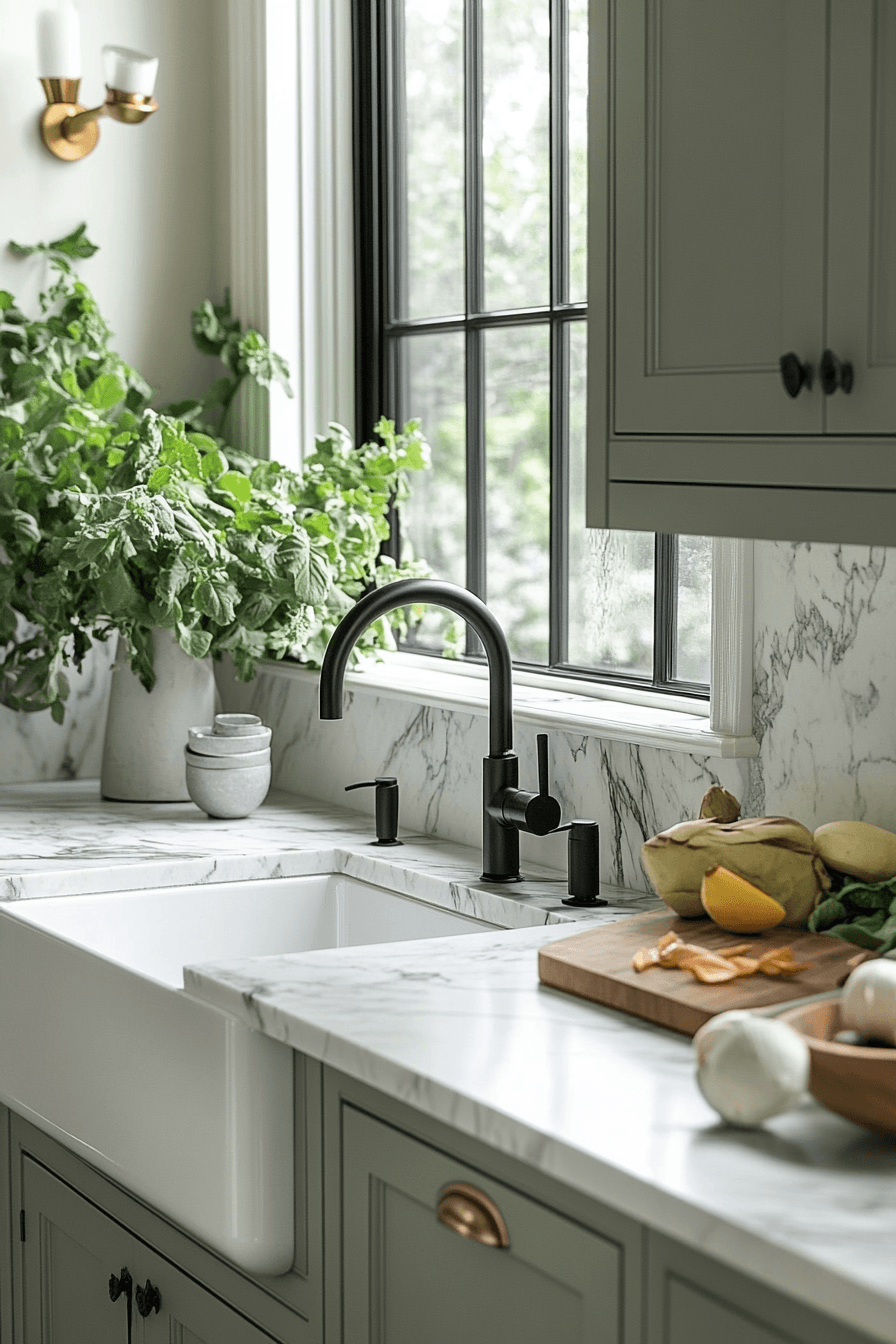
A slim marble accent can introduce just enough contrast to make sage feel more elevated. A sage green backsplash kitchen looks especially refined when a narrow marble strip runs through the green tile or frames it with a lighter, luxurious note. The white stone adds brightness and polish, while the green keeps the design grounded. This pairing feels graceful and understated rather than flashy. The room ends up looking elegant, calm, and carefully styled.
23. Full Height Green Impact
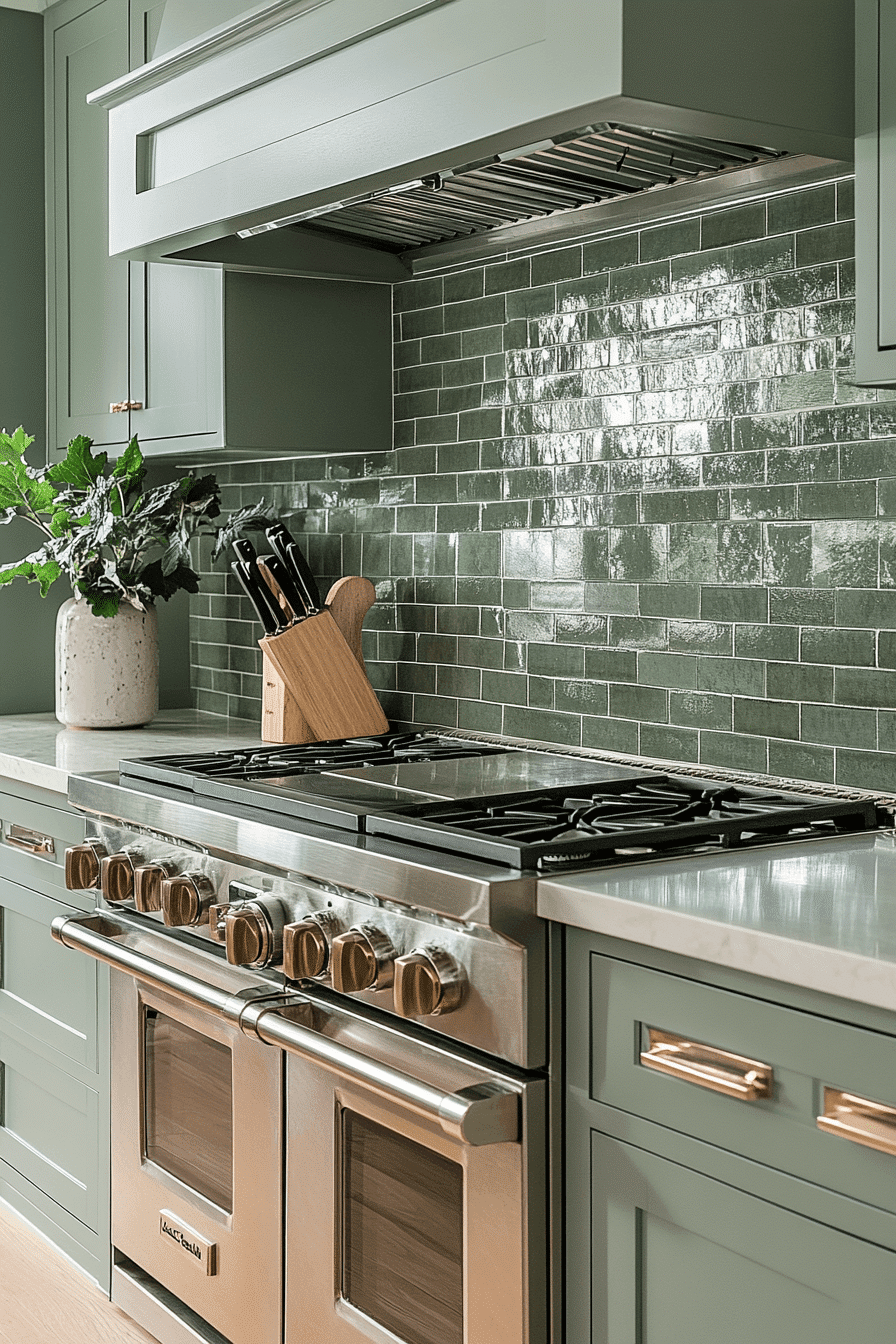
Full-height coverage can turn the backsplash into a truly defining design feature. A sage green backsplash kitchen feels more immersive when the green extends across the full wall instead of stopping at a smaller backsplash line. This continuous surface wraps the room in soft color and makes the design feel more cohesive. It is especially effective in open layouts where continuity matters. The final look feels modern, confident, and beautifully intentional.
24. Ombre Tile Quiet Drama
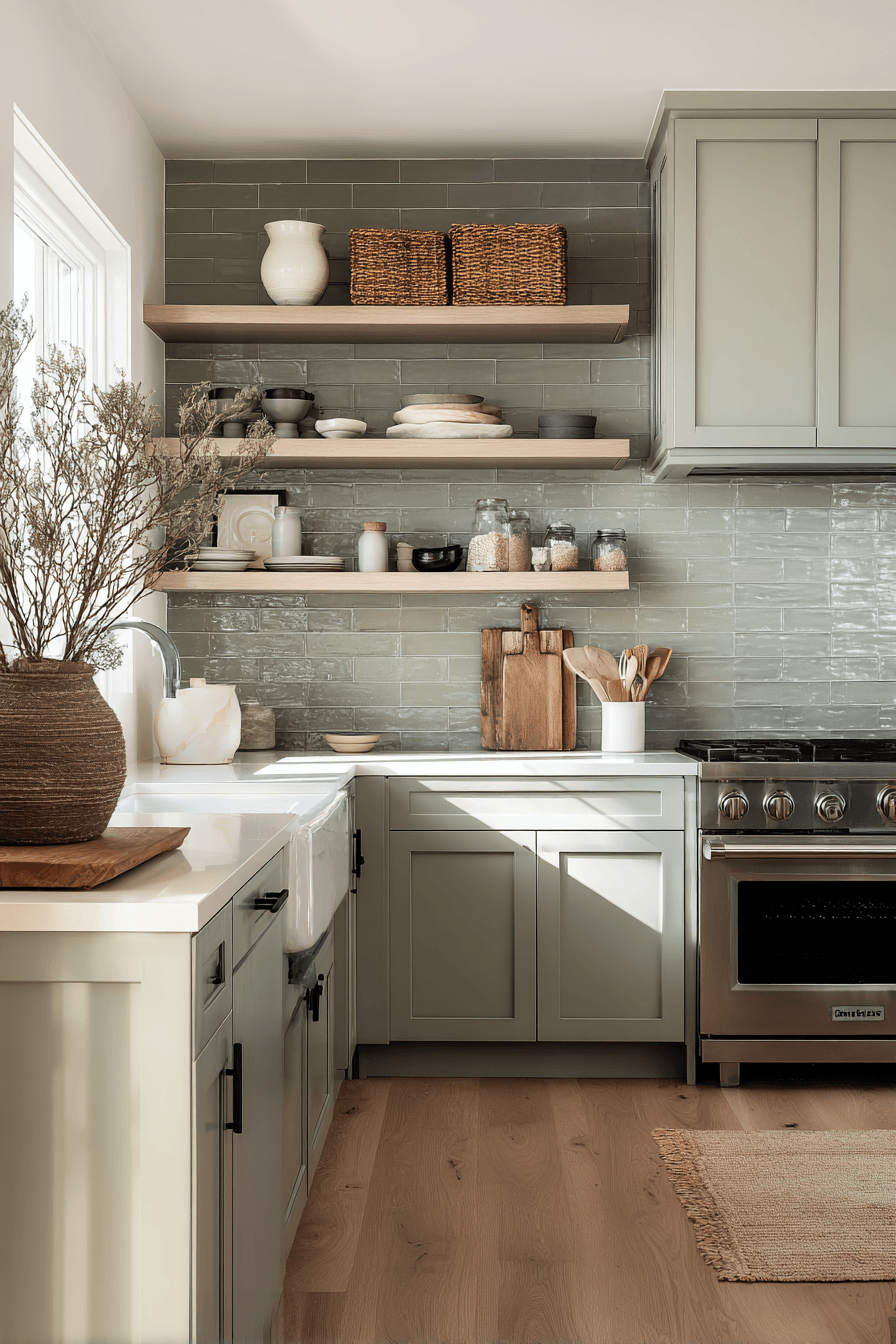
A soft gradient can make the backsplash feel artistic while still staying easy to live with. A sage green backsplash kitchen becomes especially beautiful when the tiles shift gradually from lighter sage to deeper green in a subtle ombre effect. This movement adds interest and depth without relying on a loud pattern. The result is layered, calm, and quietly dramatic. It is a lovely way to make the kitchen feel more custom.
25. Mosaic Shine Layered Detail
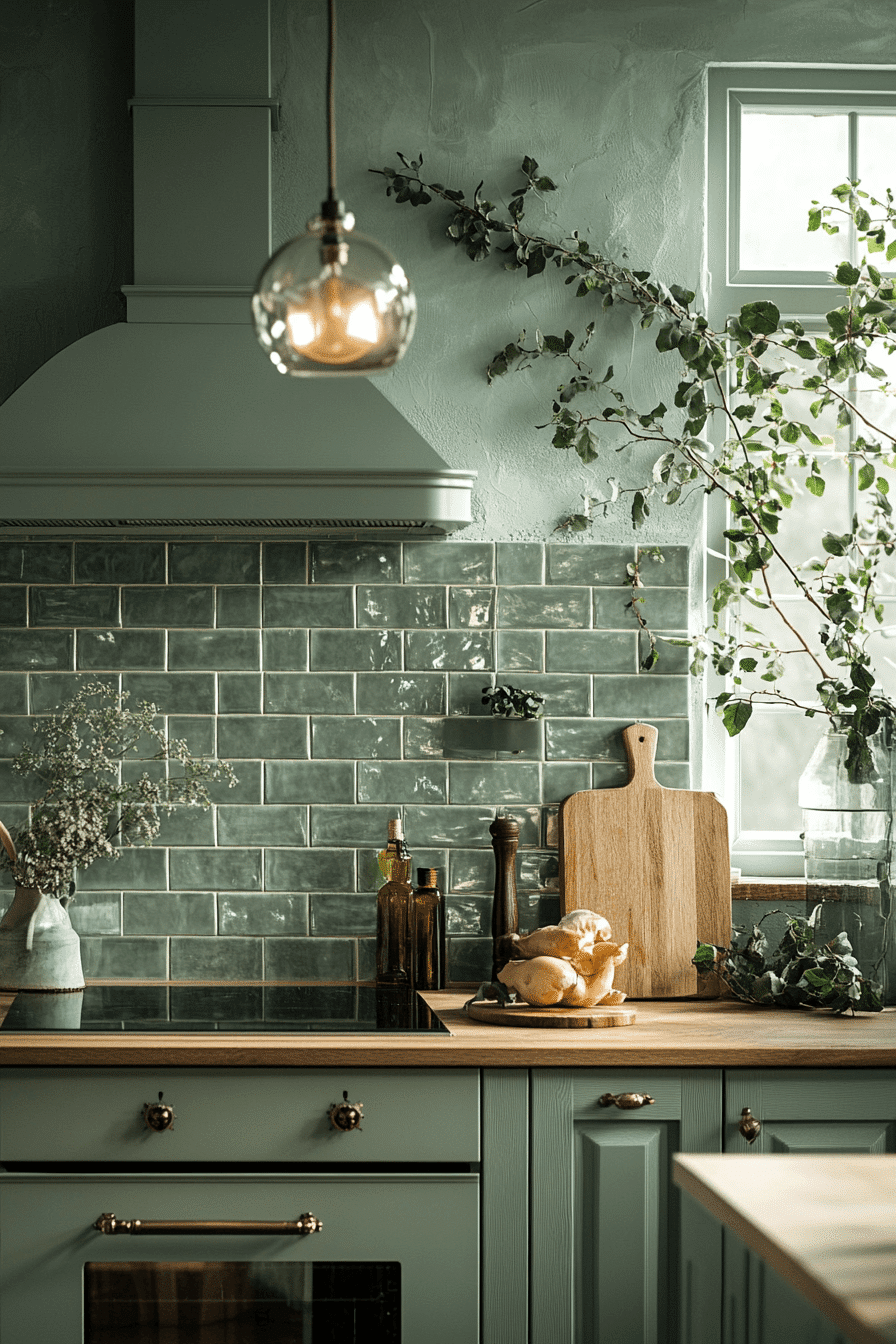
Tiny mosaic pieces can create shimmer and detail in a very controlled way. A sage green backsplash kitchen feels more dimensional when small tiles catch the light and create a delicate, almost sparkling surface. The scale brings texture without making the wall feel crowded, especially when the surrounding finishes remain simple. The overall effect is polished, modern, and subtly decorative. It is a beautiful option for adding detail without losing calm.
26. Black Framed Sage Contrast
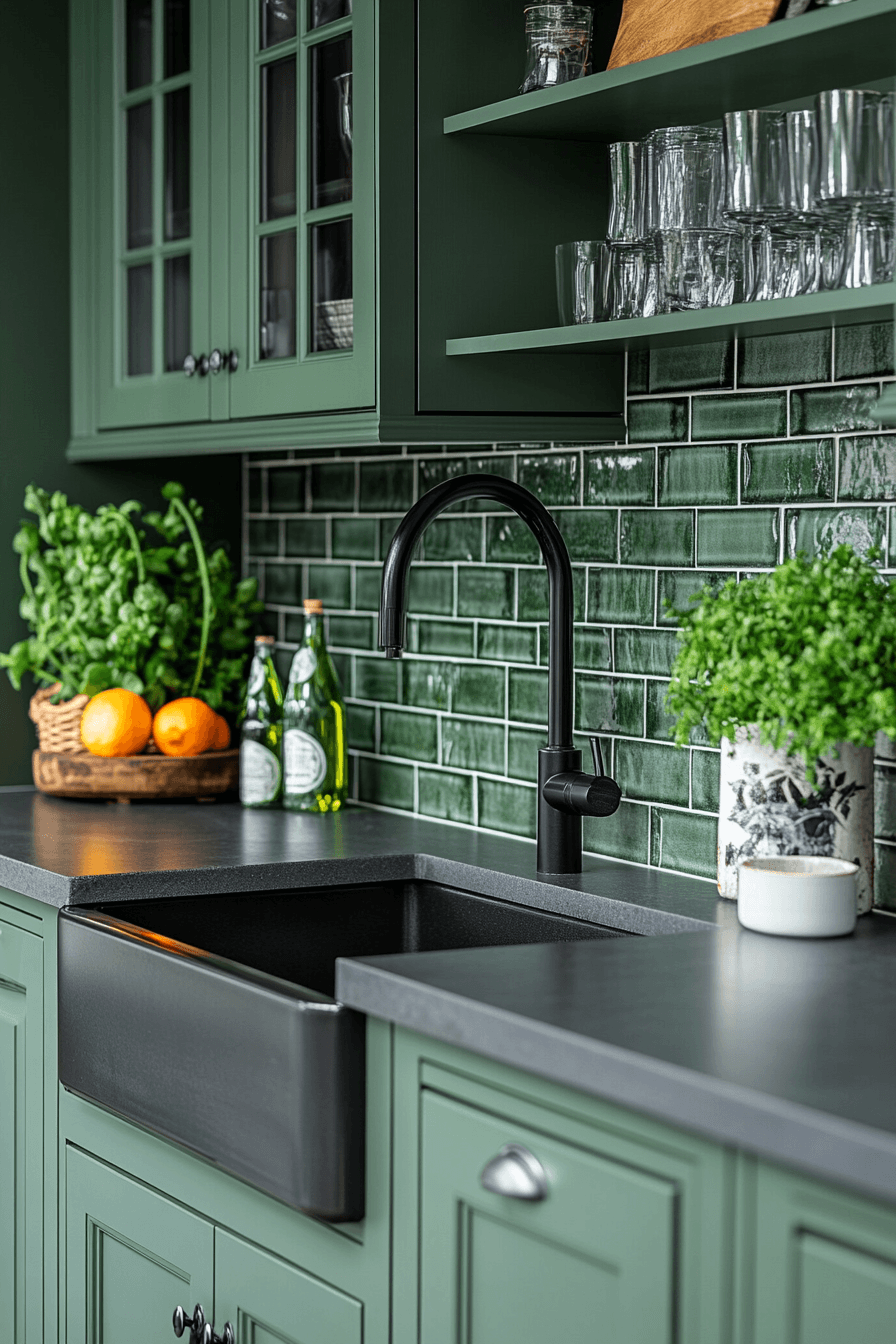
Black accents can make this soft green feel sharper and more contemporary. A sage green backsplash kitchen gains definition when darker fixtures, trim, or lighting frame the gentle green tile and add crisp contrast. The black adds structure and a bit of edge, while the sage keeps everything approachable and refined. This pairing feels bold without becoming harsh. The final look is clean, modern, and highly intentional.
27. Wrapped Walls Seamless Style
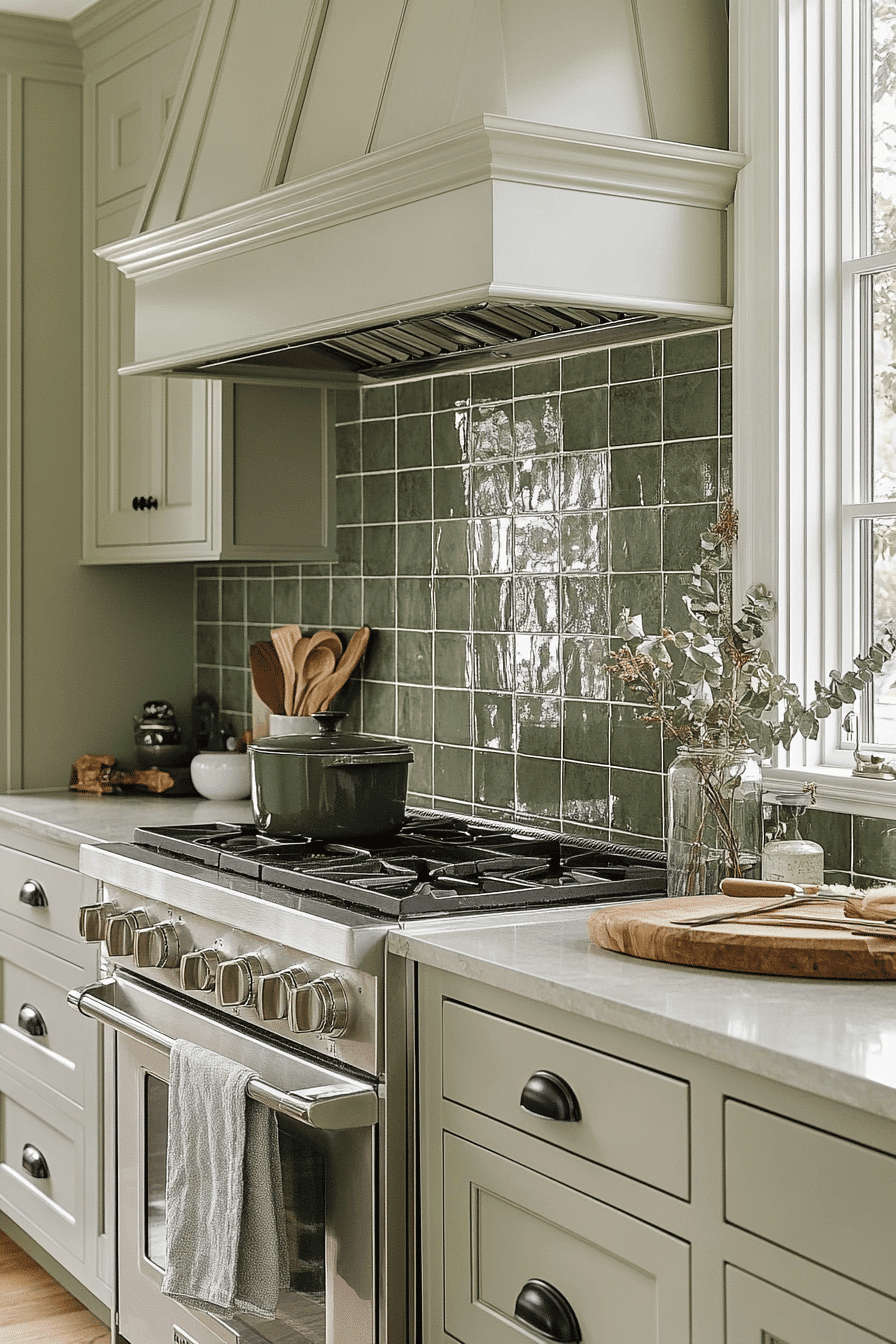
Continuous backsplash coverage can make the room feel more expansive and design-led. A sage green backsplash kitchen looks especially cohesive when the tile wraps across multiple walls and reduces visual breaks in the room. The uninterrupted flow of color creates a smoother, more unified look. Because the shade stays soft, the extended coverage still feels inviting rather than overwhelming. The kitchen ends up feeling polished, open, and beautifully connected.
I’ll keep saying it, sage green backsplash kitchen is less about a style and more about how a room meets your day. The ideas here came from rooms that got used, not staged. Take the one that solves your actual annoyance first, and trust the rest can wait until it earns its place.